
Picture this! Conservation and transformation through a gendered lens
Biodiversity conservation in the Global South has for many years been viewed as an ‘alpha-male’ dominated, settler-colonial activity, accompanied by exclusionary practices of ‘fines and fences’. But this is changing and growing movements honoring inclusivity have been proclaimed critical in order to transform conservation towards more holistic and fair ecosystem stewardships. However, the way this is happening on the ground is contested.
The exhibition draws from a participatory research project: Silverbacks, Black Mambas, and Deadly Women: Gender Identities and Transformation in South African and Australian Biodiversity Conservation. Through the method of photovoice, men and women on the frontlines of biodiversity conservation became the photographers, sharing their intimate experiences of working in the difficult conservation terrains of the Lowveld (South Africa), and the Top End (Australia).
Through their photographs and sound recordings, we explore personal insights of hope and despair in the face of the threats to biodiversity. We are invited to engage in the everyday tensions of protecting diversity of life, in a sector that is struggling to diversify itself.
The collection asks us to consider the intersection of multiple notions of transformation: from racial transformation labour policies in post-Apartheid South Africa, to the rupture of our personal relationships with nature in the face of militarism and exclusion, and the systemic transformation needed to reconcile the well-being of humans and ecosystems. Through the brave and vulnerable insights of practitioners, we hope the photographic collection will stimulate curiosity and build empathy for the diverse experiences of the people on the frontline of biodiversity protection.
This exhibition was made possible by funding from FORMAS (Project 2021-00628). We also thank all the participants in the study who gave so generously of their time and insights.
Curated by: Vanessa Masterson, Frida Lamberth Wallensteen and Carlotta Schäfer © 2025
With thanks to Laura-Bethia Campbell
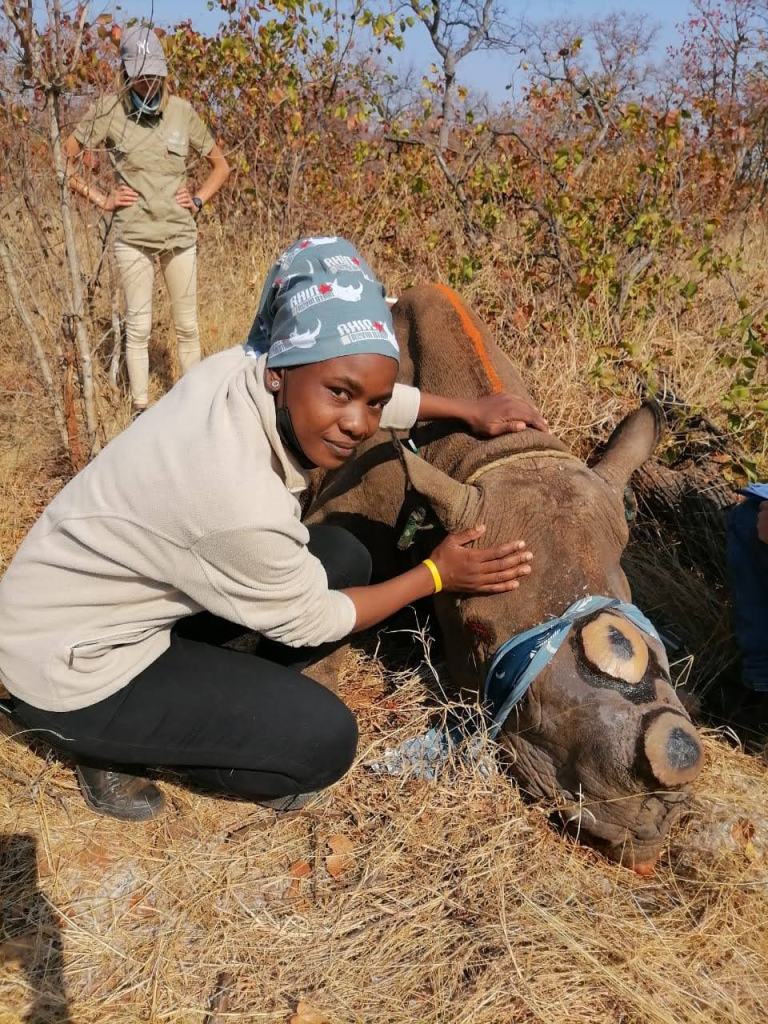

Touch a rhino
“Horn trimming is an important conservation method used in the Greater Kruger to help protect rhinos from poaching. The procedure involves safely and painlessly removing a rhino’s horn under anaesthetic. Since the horn is made of keratin, it is the same material as human nails or hair. It does not hurt the animal and grows back over time. The main reason for trimming the horns is to reduce the rhinos’ value to poachers. Without their horns, rhinos are less likely to be targeted, which helps save their lives. In areas where horn trimming has been regularly practiced, such as private reserves in the Greater Kruger, there has been a noticeable drop in
poaching incidents. As a result, more rhinos are surviving, and conservation teams can focus more on other protective efforts. Horn trimming has also increased awareness about rhino protection and encouraged stronger community involvement in conservation. Horn trimming is not a permanent solution, because the horn grows back and trimming must be repeated every 12 to 24 months.It is a life-saving measure that gives rhino populations a better chance while long-term strategies like community education, stronger law enforcement, and anti-poaching” – Admire Ndlovu
Let them know
“Educating children from our local communities about rhino poaching and wildlife conservation is one of the most powerful ways to protect our natural heritage. When children learn about the importance of animals like rhinos and understand the threats they face, especially from poaching, they become future protectors of wildlife. By involving young people in conservation from an early age, we help them develop a deep respect for nature and a strong sense of responsibility. Taking children to witness a rhino horn trimming experience is especially impactful. It allows them to see firsthand the efforts that conservation teams are making to save rhinos, and they begin to understand that the horn is being removed to protect the animal’s life, not to harm it. This kind of real-life learning helps build empathy, pride, and a stronger connection to the land and animals around them. When children return to their homes and schools, they share what they’ve learned, helping to spread awareness throughout the community. In the long run, these young ambassadors can play a key role in reducing poaching, supporting conservation work, and keeping wildlife alive for future generations.” – Admire Ndlovu
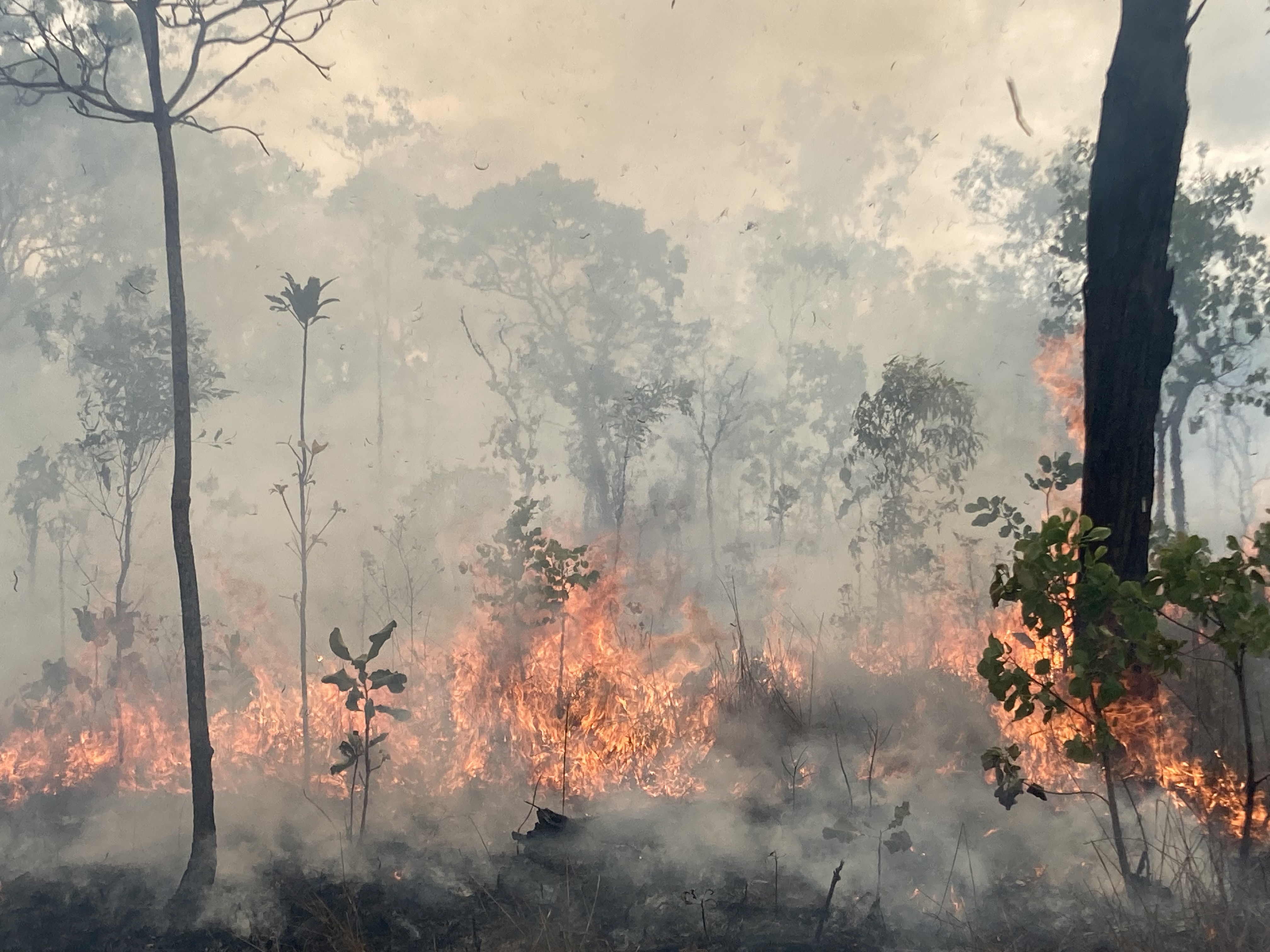
© Angga Rachmansah, 2022
Fire – friend or foe?
“…fire is a friend for this ecosystem, so it has to be there […] but it just the Gamba Grass overgrown it will, it can be like really tall, like more than two meters and very dense, which can be a fuel that can trigger like very huge and intense fire that can threaten the native species.” – Angga Rachmansah, 2022

Earning your position
“I’d like people to know that if you’re in that position, it is because you have earned it. You got there. How could they even dare to assume that you hadn’t done the work to get there? I am just as qualified as any other man, you know? Yeah. It has been earned and you have proven yourself.” -Anonymous
Team uniform
“We gave them a uniform and said ‘you guys are now a team, you’re now professionals’, you know and you could just already see the team had more pride in themselves” – Cleo Graf

Local night sounds
“…it’s one of those local night sounds that are reassuring that we’ve got creatures around here that are doing all right. Bush Stone Curlews live in groups or loose flocks. They’re active at night looking for insects, small lizards, seeds and occasionally small mammals. Curlews are more often heard than seen.”- Deborah 2025

Seed of hope
“There’s heaps of things that worry me and make me depressed about the future of the world. What’s going to happen? So I need to find things to keep me cheerful. Things like this help me stay cheerful and give me hope. Hope is this sort of really important thing but quite fragile. To find hope and hold on to it is really important because if you have no hope then you can’t be bothered doing anything about it. This is the seed and white fluffy stuffing of a Bombax ceiba, a tall deciduous tree native to the monsoon forests of the Top End of the Northern Territory. The tiny seeds are carried by the wind.” – Deborah 2025
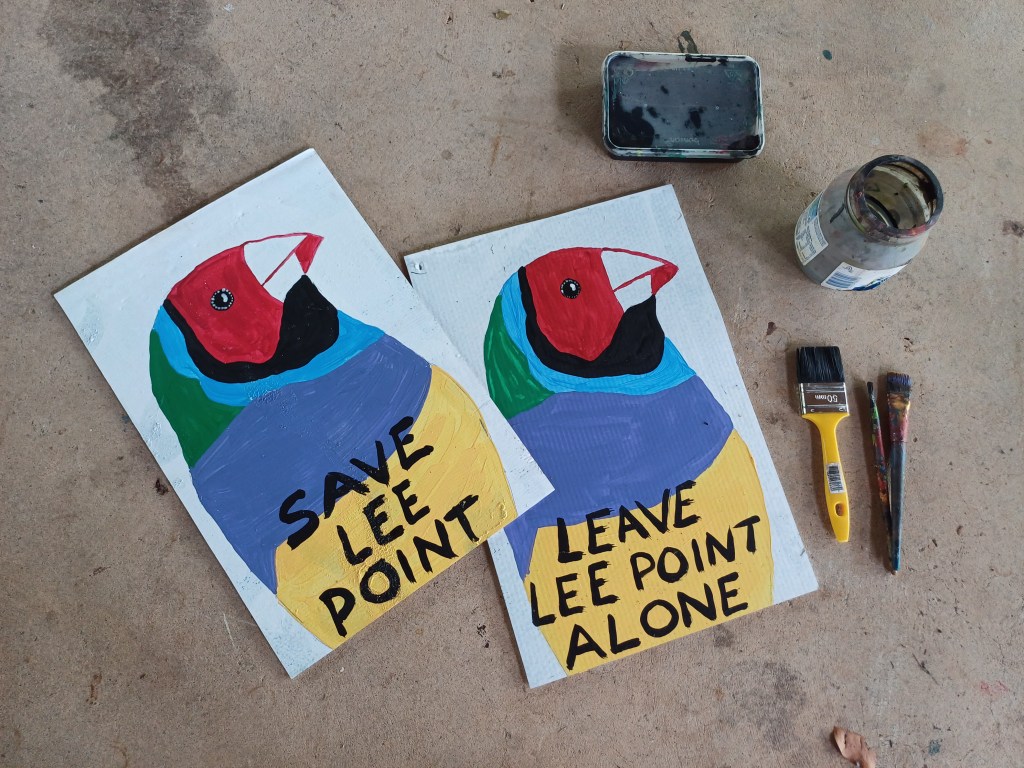
Save Lee point
“I’m an activist, and I want to spread the message to protect, I guess it’s to protect nature (…) Save Lee Point, that’s the place. Save it from being destroyed.” – Gayle Laidlaw
Creating change in snake conservation
“Creating a name for yourself in a male dominated industry such as herpetology can be challenging but with the right support and platforms, change is possible.” – Hiral Naik, 2023

This bastard grass
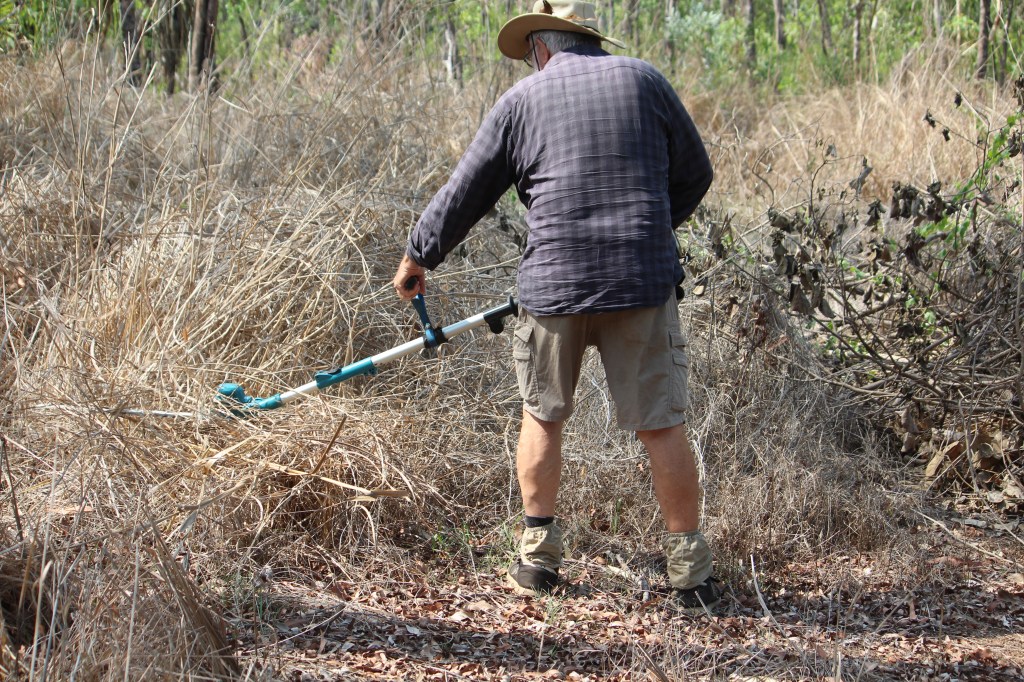
© Ian Hance. Australia, 2025
“…We may be losing species because of the Gamba grass and the huge hot fires that are now currently happening because of it. And what happens with another two degrees of global warming, what do we lose?” – Ian Hance
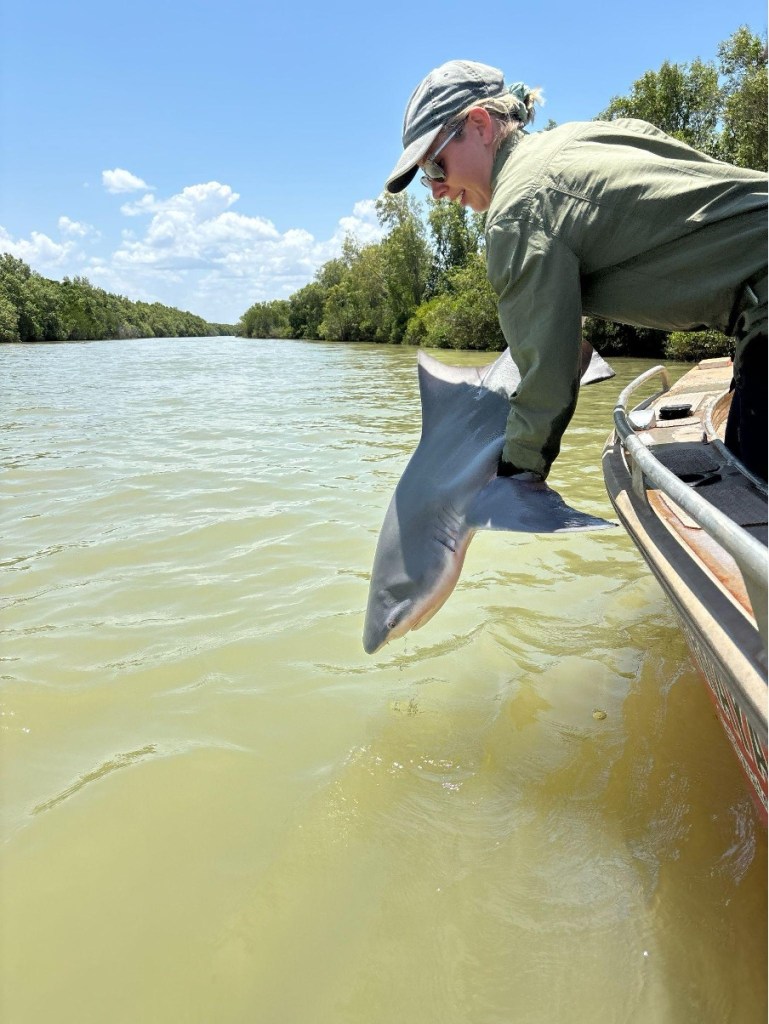
I’m not supposed to be there
“…That’s just how they talk to me in the field, like I’m not supposed to be there. And they’re always very shocked when I’m capable … I would like to think that it shows that I’m quite capable as a female but also that anyone can do this kind of work. You know, it doesn’t matter what kind of background you’ve had if you are willing to learn and are willing to listen to people and are willing to ask for help when you need it. There’s not really anywhere that you can’t go” – Julia Constance
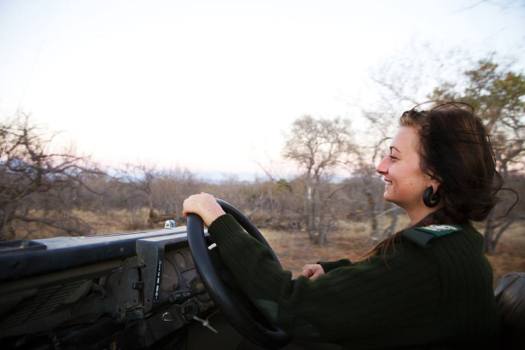
Driving the game drive vehicle
Changing the narrative
“Like conservation, photography is also really male dominated. And when I look at these pictures, I feel proud of myself. If Karabo, who’s a female, who’s black, did it. What’s stopping me? A woman taking photograph in a like a natural environment: it just speaks volumes for the conservation narrative to change. For conservation of nature to become better, by including more women. I’m proud to be a black woman who is doing the little that I can to educate or spread the word of things that I believe matter. And I believe if we do better, that could benefit us all at the end of the day.”

Aviation is very male dominated
“My head sets on and all smiles. I passed my last flight exam. I was proud of my accomplishments. I want to break ground in the world of aviation and do things that no black female pilot has ever done before. I want to clear a path for generations that will come after me. In Africa it’s not common for women to be pilots. So that keeps me motivated. I wouldn’t say that the challenges I faced were because I was a black woman. But then also, if I had grown up in a different background with more financial stability and access to knowledge and connections, it would have been easier. Aviation and conservation need to coexist for the better of both fields. Aviation is also very male dominated industry, like conservation. And if there can be a female pilot, there can also be a female head ranger. There can also be a female guide. There can also be female, everything.” – Karabo Magakane
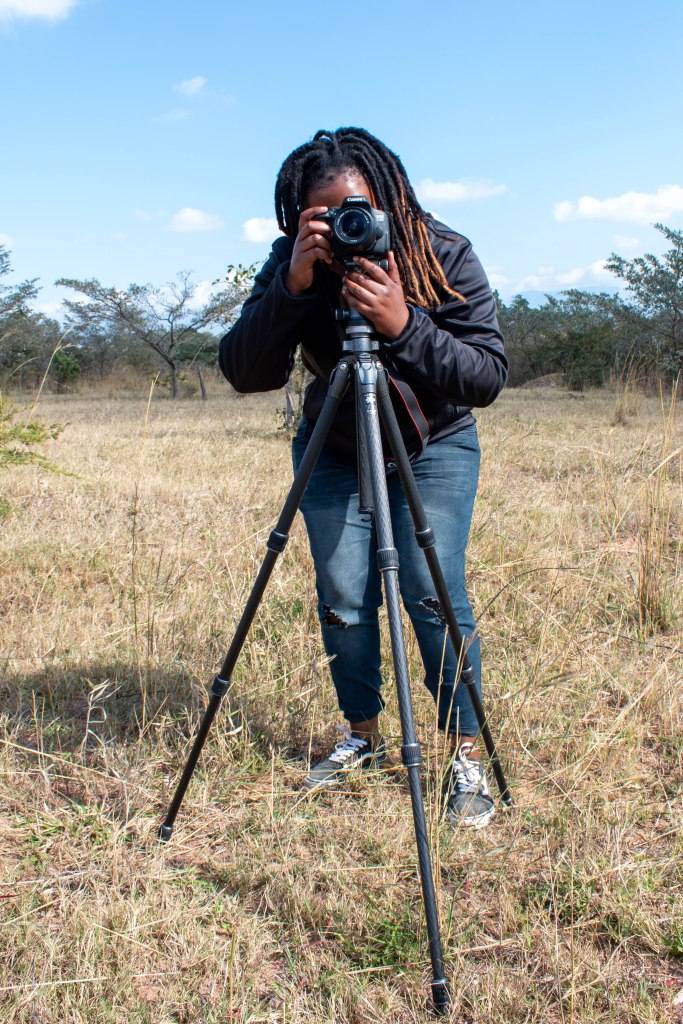
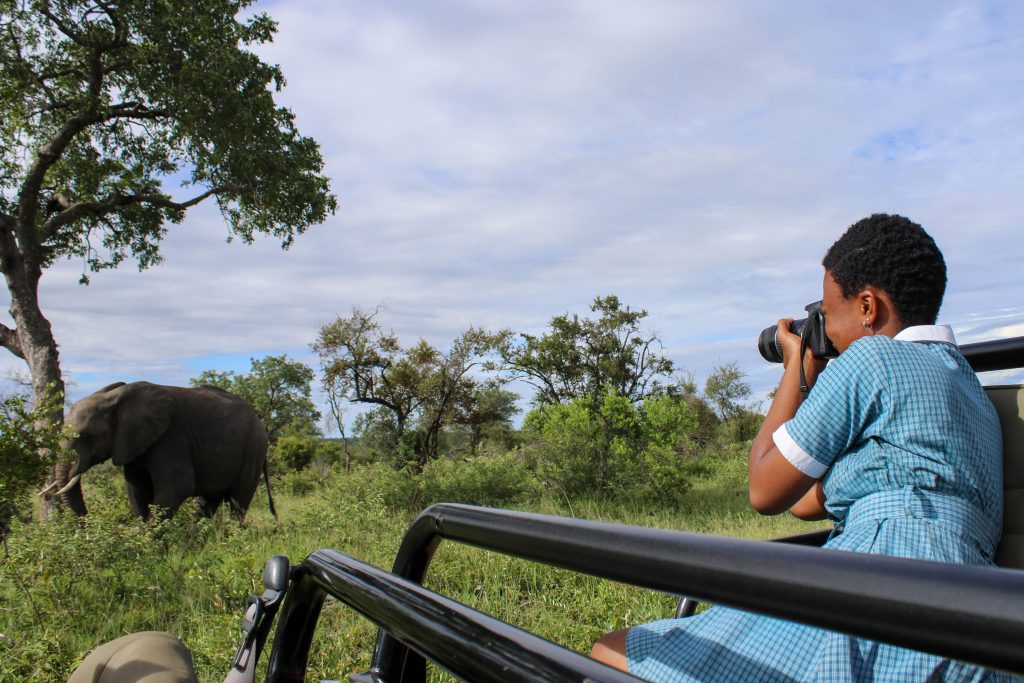
Lowveld, South Africa
It’s her first game drive
“When we take the students from local schools out on a game drive – for most it’s their first game drive ever. For me too – the first time I went on a game drive was with Wild Shots Outreach. It’s a great feeling to share this experience, and to be part of this beautiful moment for them.” – Karabo Magakane

Good Mother
“When my daughter was young, I often took her into the field if I was doing work that didn’t involve direct contact with animals (i.e. it was safe enough). I’d plonk her down in the dirt and she’s entertain herself getting grubby and enjoying life. On this occasion I was setting up base stations (devices that measure whenever a specific buffalo comes within 1m – each buffalo was fitted with a corresponding collar). It wasn’t until I was about the pack up and leave that I realised the entire herd of buffalo was standing mere meters from my efenceless child, hidden in the thicket, just watching us!” “At first I felt like such a terrible mother. And then I thought – actually that was quite cool – that moment of sharing this strange, bald, little pink creature with the herd. It was quite a cool moment for me.” – Kath Forssman
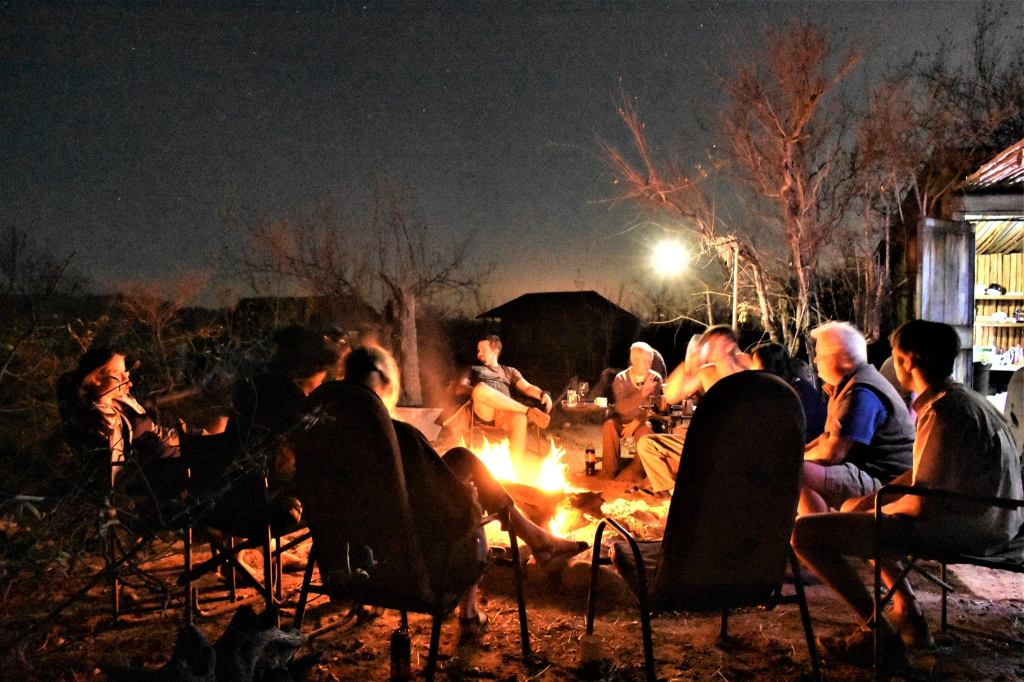
Behind the scenes of conservation
“This picture is just, I would call this home. We run a conservation volunteer project as well, and interns where students from all over the world come. And with the staff we sit around a campfire – and sometimes you know we argue with each other, we yell at each other, we’re like ‘yeah and this needs to be done! And this is not sorted! But if you want to work in conservation, then this is what it’s going to be like. It’s not always a pretty picture, and sometimes it’s tiring. But the volunteers see how it really works behind the scenes in conservation.”
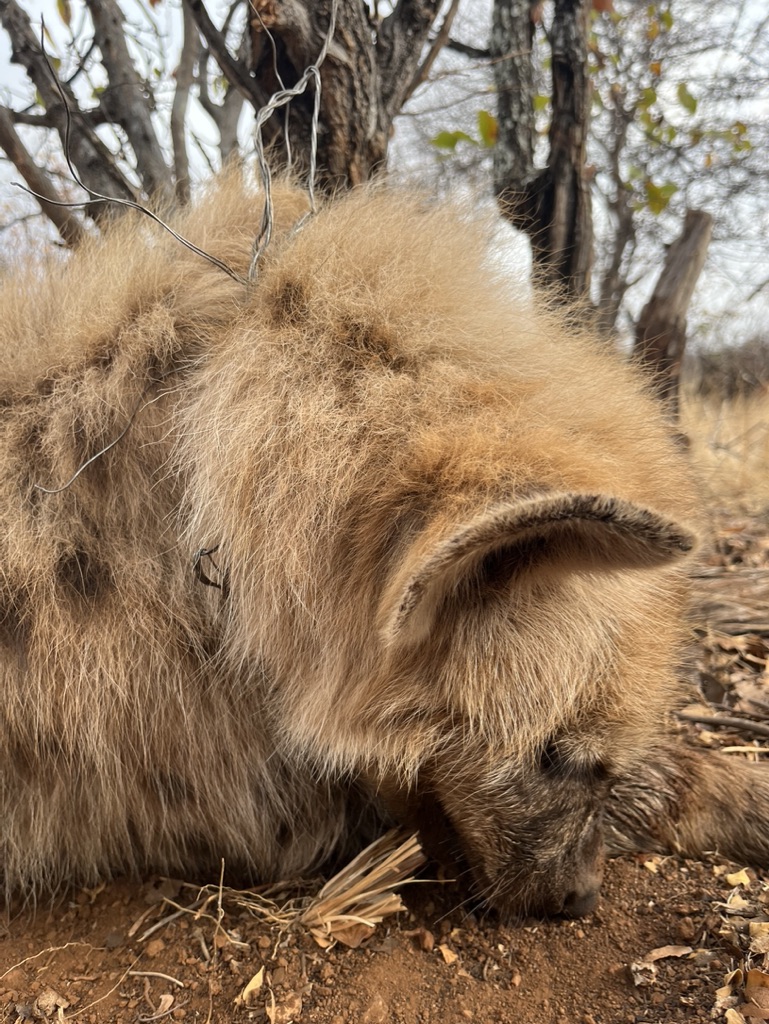
The hardship of seeing dead animals every day
“This Spotted Hyena was caught in a snare set by poachers. To be honest, I see dead animals every single day. I am so tired of dealing with dead animals. My job places me in high-risk situations constantly, and you just have to put up with it, but you get fried very quickly. So, it’s good to talk about it get this off my chest.” – Kyle Walker
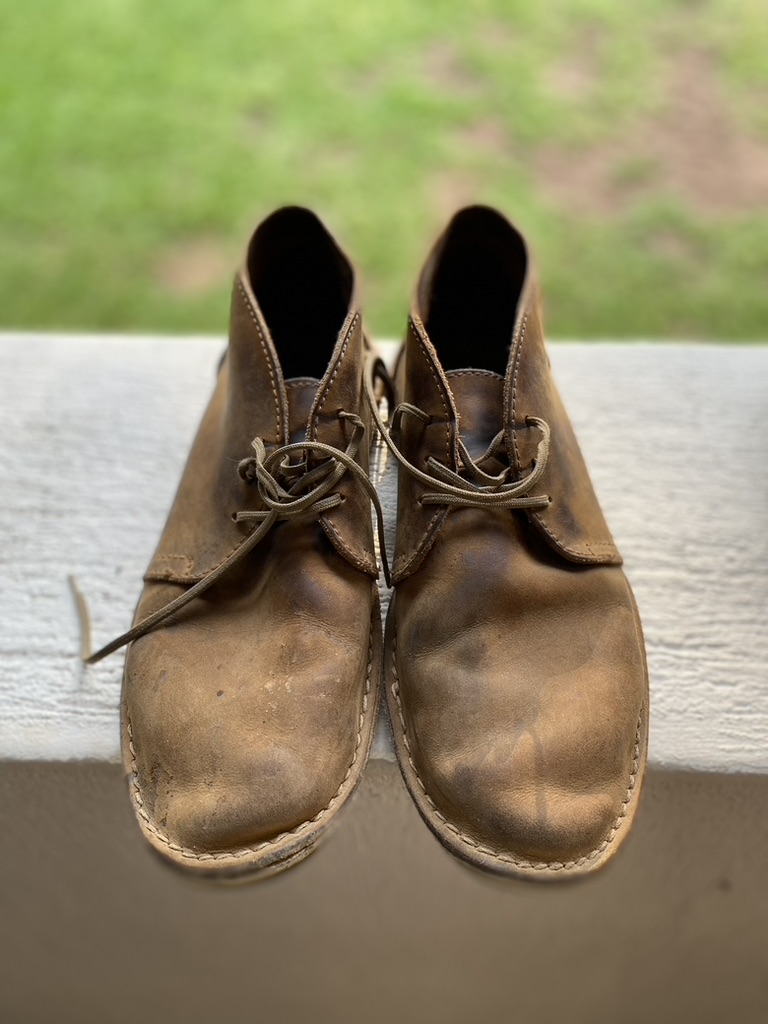

Can masculinity and femininity be more than opposing poles?
“These shoes [on the left] remind me of ancestors, people who trekked from the Cape, call them rebels or pioneers or crazy. This is what they wore. I think South Africans should all own at least one pair of these. They represent our collective resilience. These other ones [on the right] are definitely more feminine, compared to some of my shoes. And it’s a part of myself that I don’t often express in the workplace. Sometimes I feel I neglect a more feminine expression to a degree, because my activities gravitate towards an outdoor life where you need hardy shoes, not quaint sandals…Yet, both pairs represent me, but one gets worn more than the other.” – Anonymous, Lowveld, South Africa
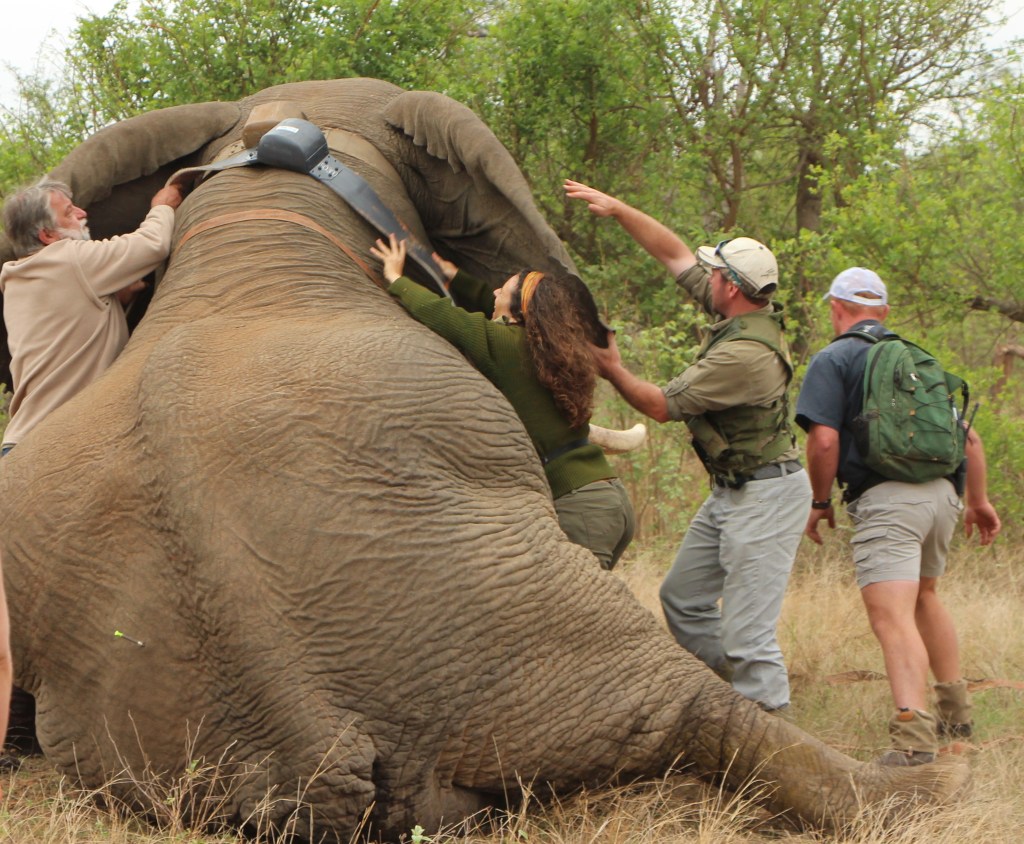
Collaring
“And then the opportunity to, when you collar elephants, to have them up close and
personal, and to really experience the textured layer of elephants” – Michelle Henley
Burning Nkhuhlu exclosure
“…In my field it’s not only a male-dominated field, it’s a race thing as well. It’s a very white-male dominated job. So with fire management specifically, we are hopefully changing that. I mean, I am trying to change it.” – N. Govender
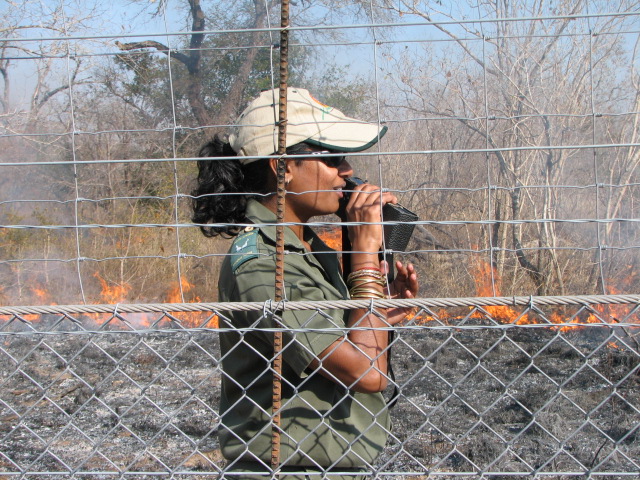

Lunch on the bridge
“It was 1999 and I had just moved from research to conservation management in the Kruger National Park. We were two young women in the male-dominated ranger corps and it was super exciting. We had become part of the conservation family, proud to wear our uniforms.” – Stefanie Freitag Ronaldson
Marrying two worlds
“Conservation is not just a job but a way of life, blurring the lines between work and family life. This is a marrying of two worlds, particularly for me as a woman in conservation: me, my job and my family. I had the privilege of taking my children into the field. I feel fortunate to have had the opportunity to make my job be my life and my life be my job. It provided many opportunities for us as a family, for my daughters, to be in nature. I was involved in ‘hands-on’ conservation; life and conservation was simpler then, without the onslaught of poaching” – Stefanie Freitag Ronaldson
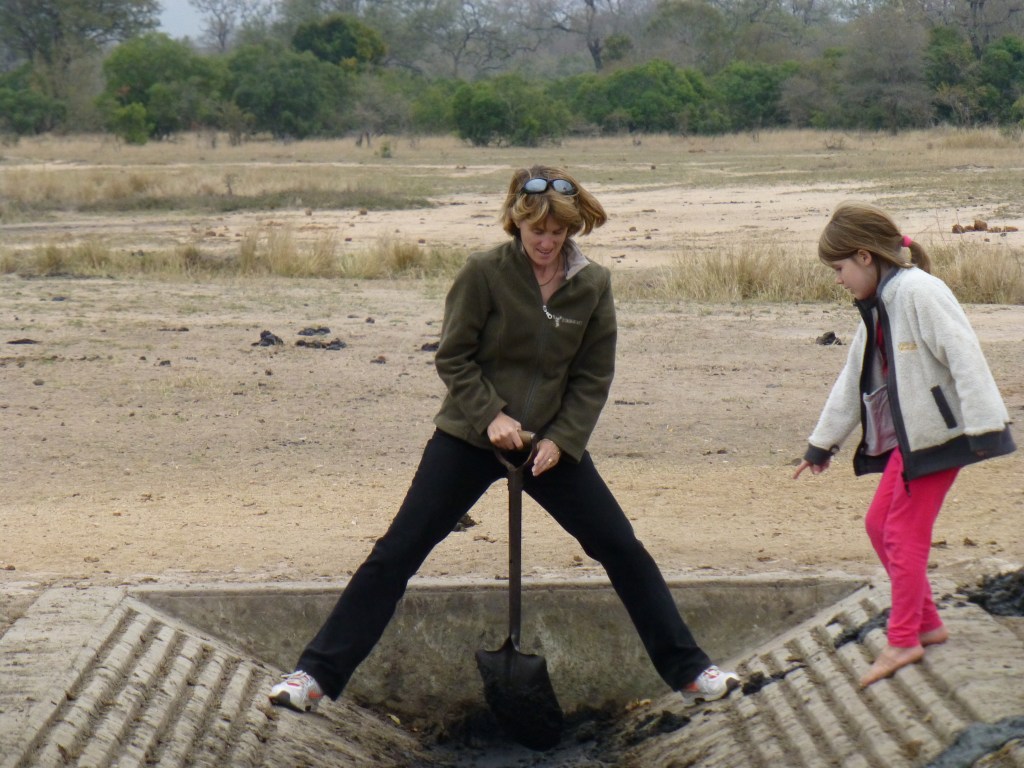

Eat and breathe conservation
“…we guys that are in conservation, we eat, we breathe conservation. I mean we know better. We know better than to do harm” – Sweetness Myeni
Birds-eye view
“Well, it gives me a great relationship with nature because I get to see a birds eye view of an entire regional ecosystem being the harbor. And I not only would get to survey the birds, shorebirds and water birds, but we’d also see turtles and crocodiles and whip rays and manta rays when we were up in the helicopter doing the survey.” – Amanda Lilleyman, 2024
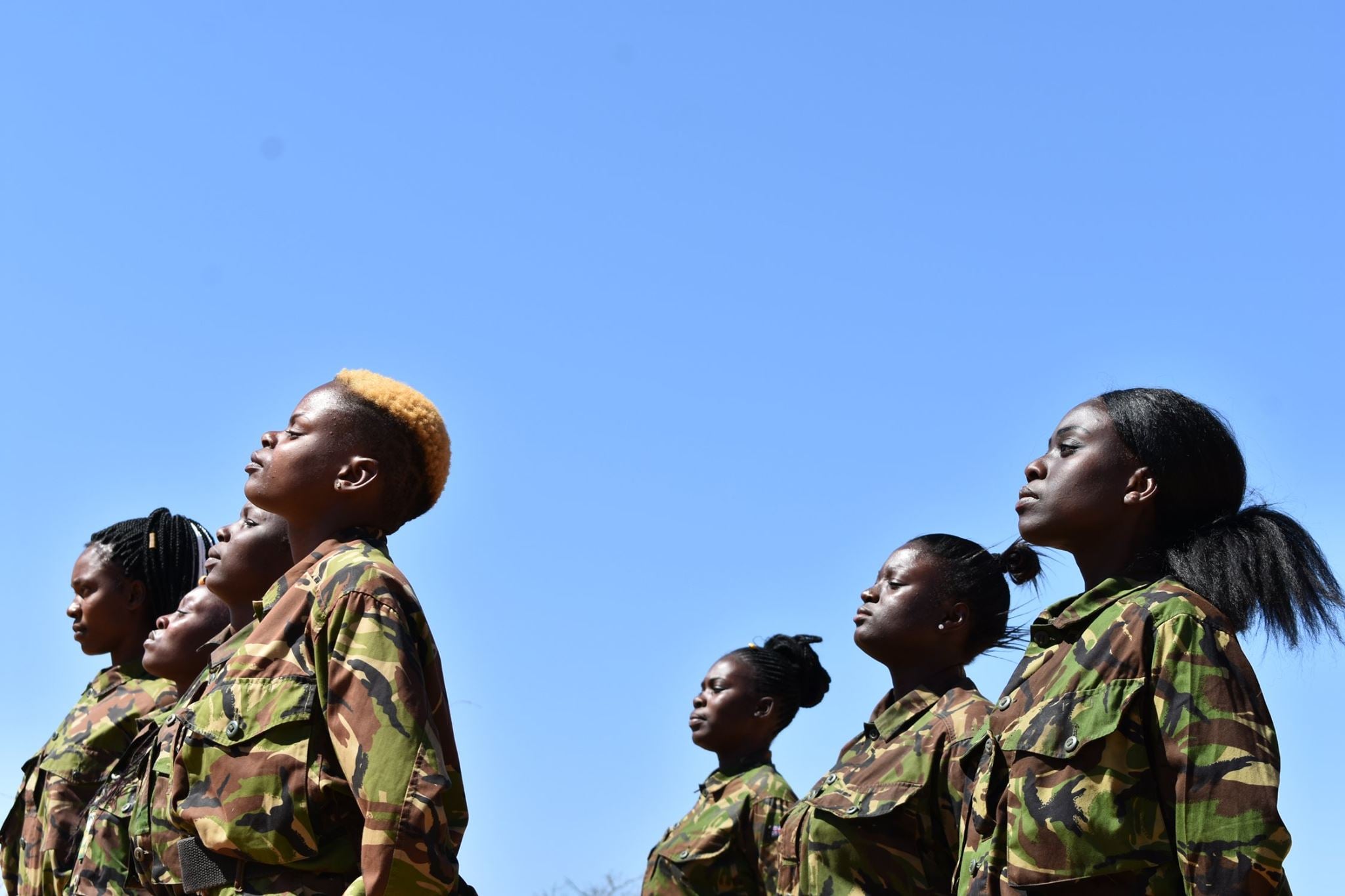
© Valeria van der Westhuizen for Transfrontier Africa
Black Mambas Anti-Poaching Unit: Women Reshaping Global Conservation. Olifants West Nature Reserve, South Africa. 2023.
“There is something inexplicable about being a wildlife ranger. Authentic dignity and pride. Especially in women who are currently breaking gender stereotypes in global conservation. Women who are doing work that challenges them, and these challenges build them up for them to become who they have never even dreamt of being. It’s being proud of what they have done for the last 12 years as anti-poaching unit operating in the Greater Kruger. It is owning personal and professional transformation that they have experienced due to the harsh training, tough work conditions and pressure and responsibilities of being the first all-women anti-poaching unit in the world”. – Valeria van der Westhuizen for Transfrontier Africa
Black Mambas on Patrol

“Besides their focus on preventing rhino poaching, the Mambas also focus much of their attention to snare sweeps and eliminating bushmeat poaching. Snares kill more wildlife than anything else! It’s so important to make sure that you not only work inside the reserve but that you also work outside the reserve and you know, make this area undesirable for poachers. And that’s a big aim of what the Mambas do as well.” – Leonie Hofstra
 Gender Identities and Transformation in Biodiversity Conservation